
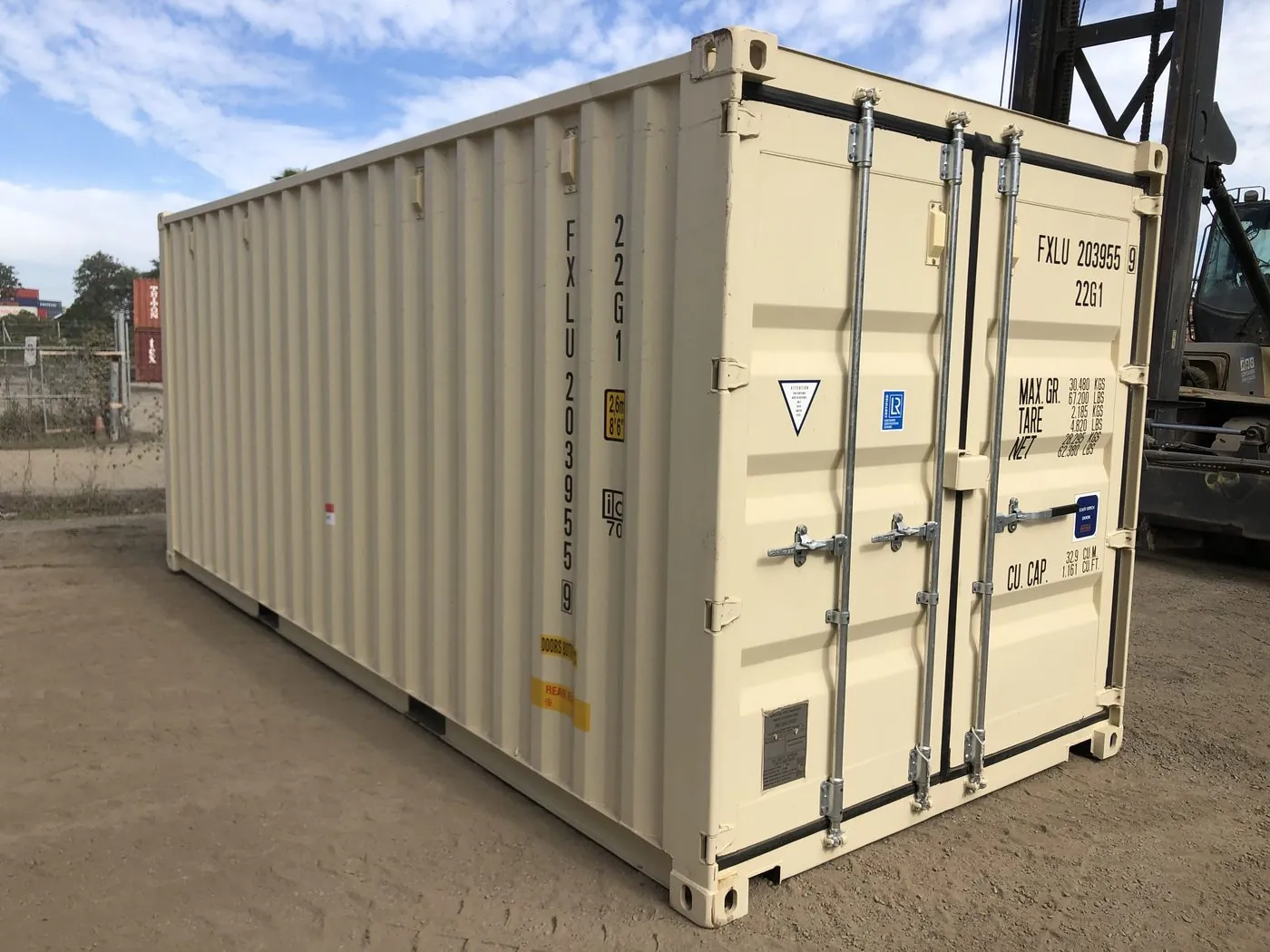
 20ft
20ft20ft Shipping Containers
There is about seven metres of straight, reasonably level ground for it to sit on, and you would rather not discover in half a year that the bigger box was the answer.
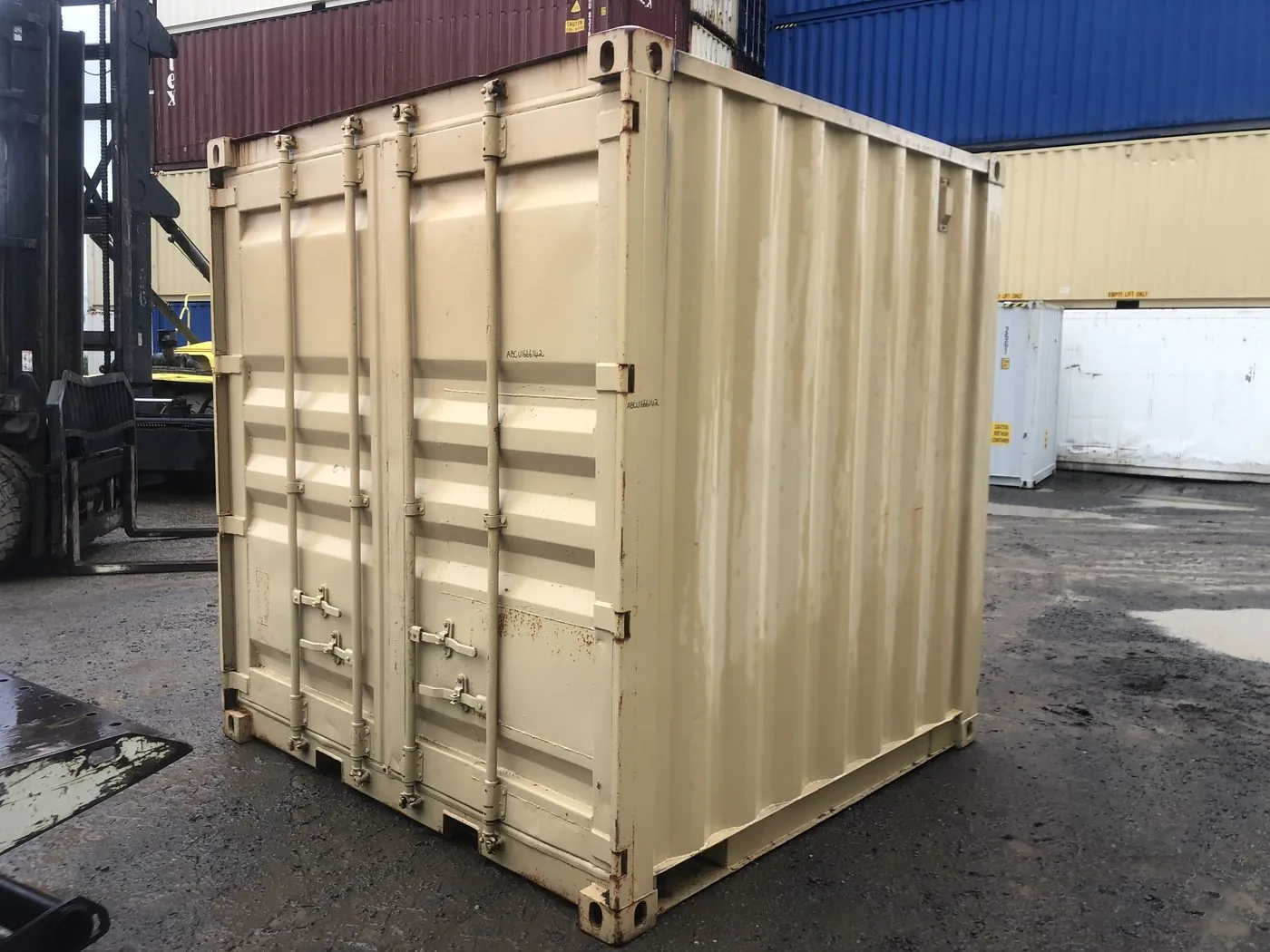
10ft containers
The size that gets a phone call when the block is pinched and the fence sits closer than anybody would like. A ten is not usually a shortened twenty, whatever the assumption — most leave the factory at that length or are built short deliberately, which is why it is rarely the cheap option per cubic metre.
The case for it
A ride-on, a bench and shelving up the walls — roughly what a single lock-up garage swallows. A two-bedroom unit's worth of furniture will go in if it is packed hard and nothing in it is fragile.
Ten-footers are the tightest supply of any size in the country. Used ones can turn over inside a week, so a figure somebody gave you last month may not hold today. Ring and ask what is physically standing at Cornubia, or at whichever depot is nearest you.
| External (L × W × H) | 2.99m × 2.44m × 2.59m |
|---|---|
| Internal (L × W × H) | 2.83m × 2.35m × 2.39m |
| Door opening (W × H) | 2.34m × 2.28m |
| Internal volume | 15.9m³ |
| Tare weight | approx 1,300 kg |
Grade matters more than anything else in a container quote. Grade is what decides whether the box keeps water out. Anything sold as cargo-worthy is inspected wind and watertight before release — for storage use, which is separate from the CSC certification an export job needs — and new single-trip units, one loaded voyage with rubbers that have barely weathered, are sealed as well. As-is is the cheap end and carries no watertight claim at all: expect a previous repair, a floor section that has gone soft, or a gasket that no longer pulls up hard against the frame. We list those faults and photograph them on request, before delivery, so nothing turns up as a surprise when the truck does. If what goes inside has to stay dry, start at cargo-worthy.
Every 10ft is priced on the individual unit, the grade you settle on and the run to your address, and the number you get covers the container and the delivery together. Ring 1300 467 776 or send the form.
Price this unit to your addressPrices are quoted with the container and the delivery together, so the figure you get is the whole cost to your address rather than a headline that grows later. Ring 1300 467 776 or send the form and you will have a price for the exact unit.
Photos
Actual jobs rather than catalogue imagery. Ask and photographs of the specific container you are buying will be sent through on request, before delivery.
Access
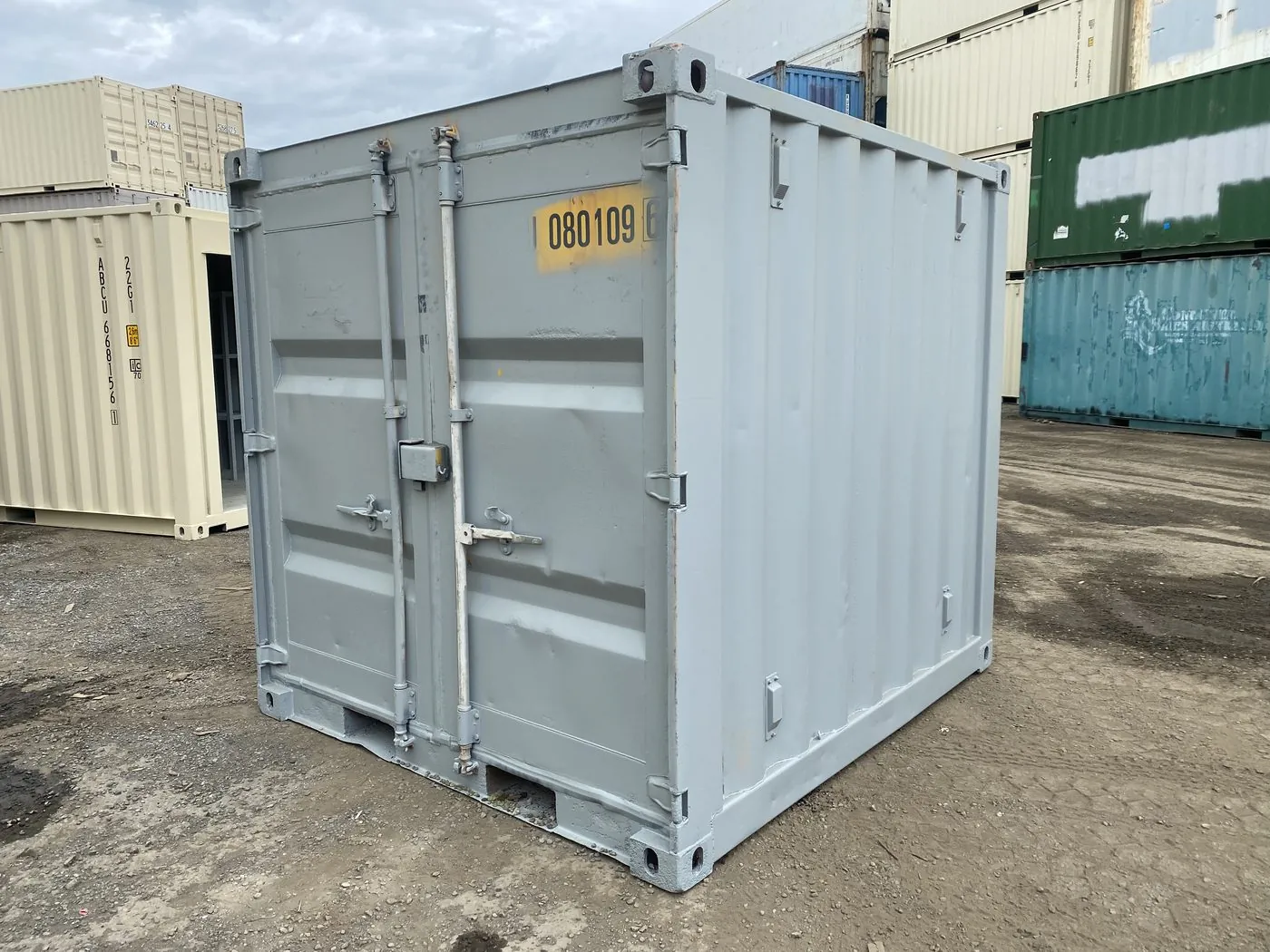
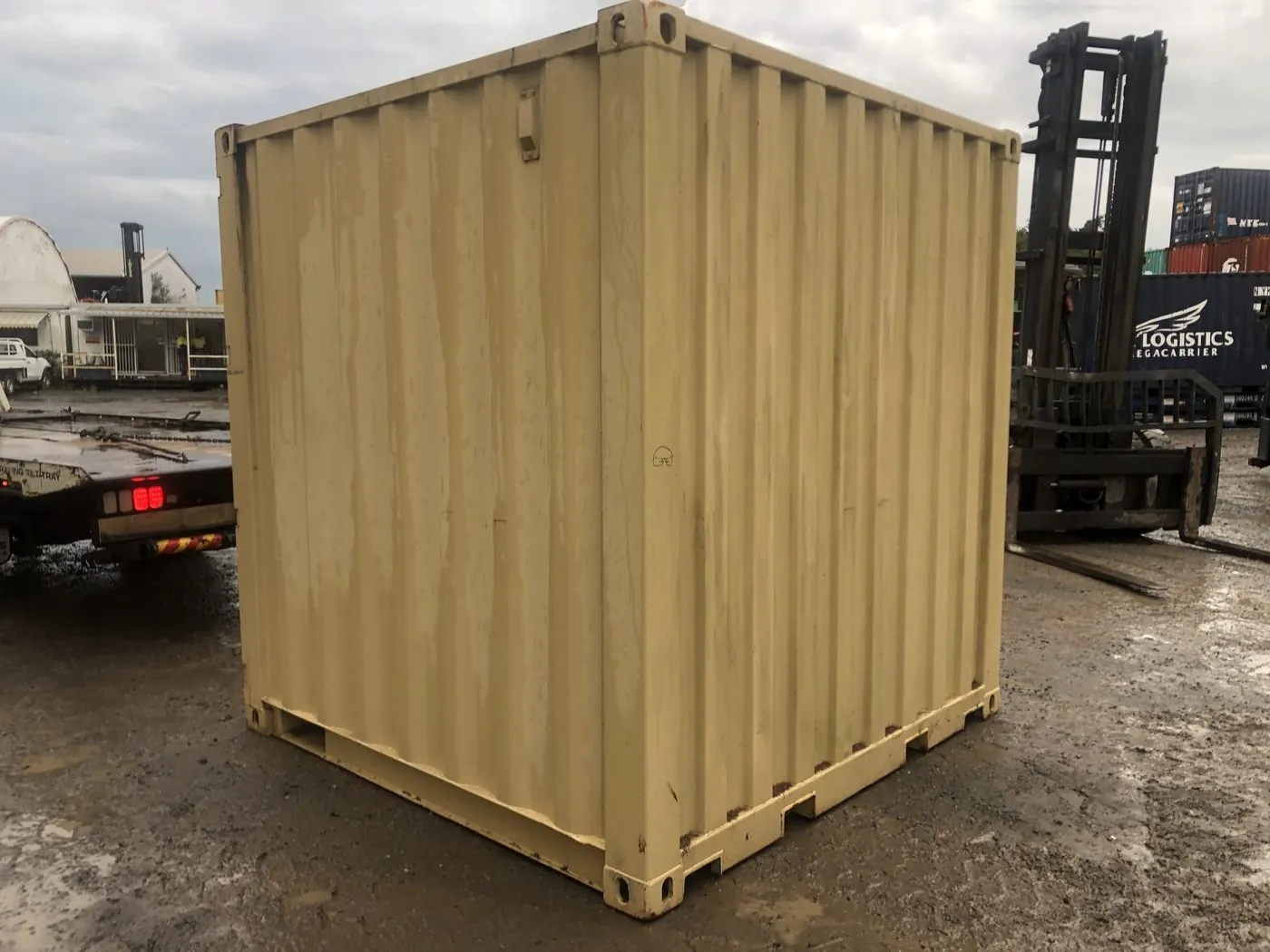
A ten lands off a standard tilt-tray and wants roughly half the approach a twenty does — around 12 metres of straight run, 3 metres clear where it pinches, and 4.5 metres overhead while the tray tips. That is precisely why the size exists. Tight suburban blocks, pinched side passages and awkward courtyards in the inner city become workable at this length and stay impossible at anything longer.
Three photographs settle it: one taken standing at the street looking in, one along the run itself, and one of the ground the box has to sit on. Send them with the enquiry and you will be told which truck the job wants, and whether the drop is straightforward, before anybody talks money.
In detail
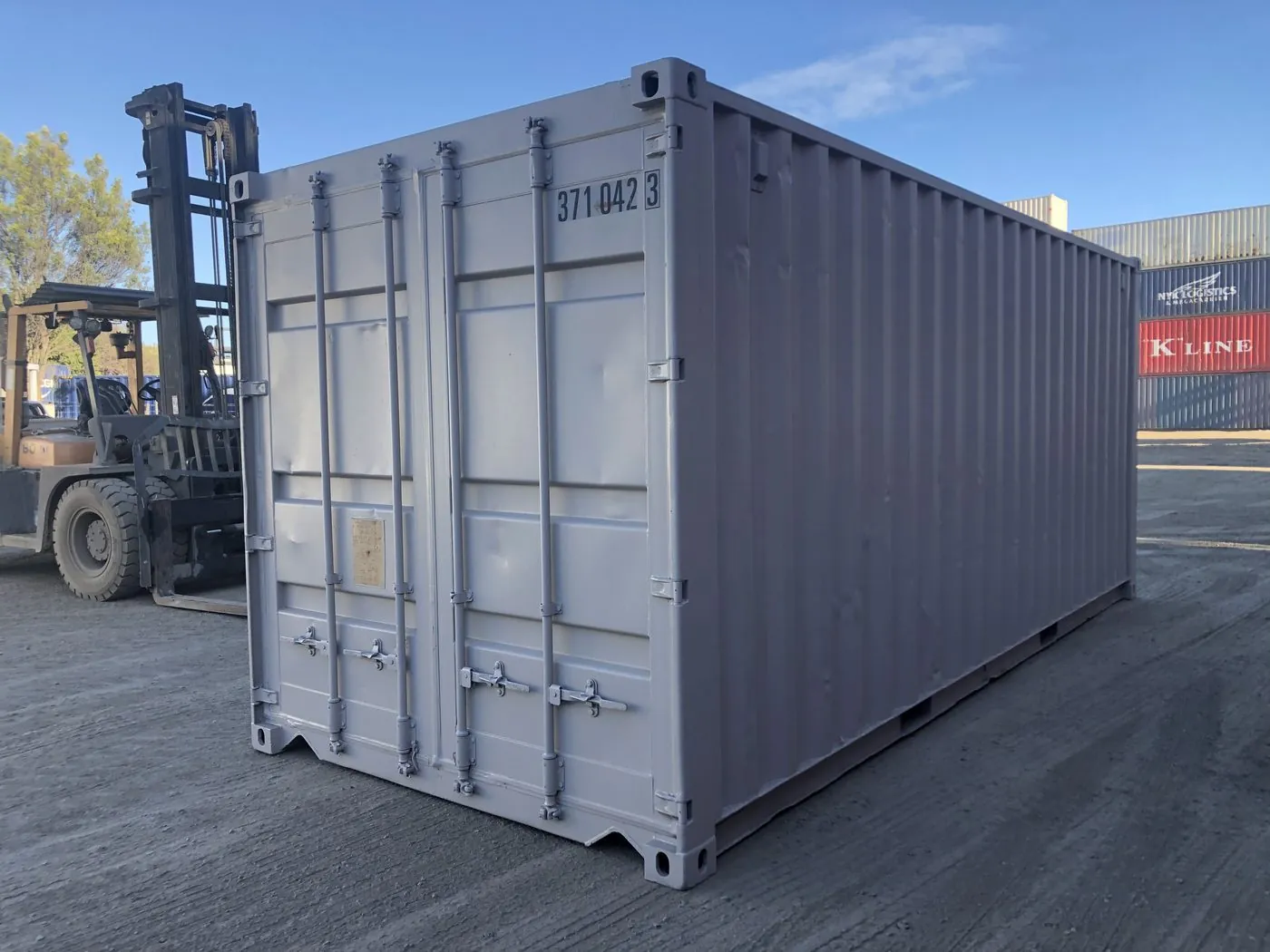
The cubic figure flatters it. 15.9m³ sounds generous until you allow for reaching things, and the honest comparison is a single lock-up garage bay at full container height — about 2.39m of clear headroom, which is more than most garages give you. That height is where a 10ft quietly wins: shelving to the roof, a ride-on underneath, and a bench along one wall still leaves a walkway.
Pallets are the test that settles most arguments. Two Australian standard pallets sit across the width of a 10ft with very little to spare, and the door opening is 2.34m wide by 2.28m high, so anything long or awkward has to swing in through that gap rather than appear inside by magic. Measure the longest thing you own before you settle the length. The full figures, alongside the 20ft and 40ft, are on the container dimensions page.
A 10ft is not the cheap way to buy room, and we would rather say so than sell you the wrong box. Ten-footers are built short deliberately rather than cut down from a twenty, supply of them is the thinnest of any size in the country, and the result is that you almost always pay more per cubic metre than you would for a 20ft shipping container. If the ground will take the longer unit, the longer unit is usually the better buy.
What a 10ft buys you is access, and access is not a nice-to-have. It slips down the side passage of an ordinary suburban house where a twenty has no chance, it comes off a standard tilt-tray rather than needing a crane, and it wants roughly half the straight approach. On a pinched block, a short setback or an inner-city courtyard, that is the difference between having a container and not having one. It is also the sensible pick when the job is genuinely small — a lock-up for the mower, the compressor and a wall of hand tools, or a secure store on a site with no shed.
Ring with the address and a description of the entry and you will get both figures side by side, the ten and the twenty, with the delivery worked into each. Where the twenty fits, we will tell you it fits.
A 10ft weighs about 1,300 kg empty and puts that load through four corner castings rather than spreading it across the footprint, so what sits under those four corners matters more than the ground in between. Concrete pavers, sleepers or short concrete pads at each corner are the usual answer. Level it properly before it is loaded, because doors that shut sweetly on a level box will bind on a twisted one and no amount of adjusting the locking bars fixes a racked frame.
Leave yourself room in front of the doors. They swing through a wide arc and need roughly 2.5m of clear ground to open fully, which is the detail most often discovered after the truck has gone. Keep the unit off a fence line if you can, give the roof somewhere to drain, and if it is going on grass or soil, expect the corners to sink unevenly through a wet season unless they are bearing on something solid.
Access at the street end is a separate question, and it is the one that decides which truck comes. There is more on it, including what to photograph before you enquire, on the delivery and access page.
Yes, and that is one of the quieter arguments for the size. A ten is the easiest container in the range to relocate because it goes back onto an ordinary tilt-tray, so a move within a property, across town or to a new address is a straightforward job rather than a crane booking. Plenty of people buy a 10ft precisely because it is not a permanent decision.
The catch is that it has to come out the way it went in. If a fence panel came down, a tree was trimmed or a slab was still being poured on delivery day, the same clearances have to exist again on the way out. Empty it before it moves — a loaded container is not a container that can be dragged — and if it has been sitting on soil for a few years, allow time to get it lifted clear rather than winched. A container that has been modified with a roller door, windows or lining moves just as easily; modification work does not lock it in place.
The grade decides more than the length ever will. New single-trip means one loaded voyage, rubbers that have barely weathered and a floor nothing has been dropped on. Cargo-worthy used is the volume grade and is inspected wind and watertight before it is released, which is a storage standard and separate from the CSC certification an export job needs. As-is is the cheap end and carries no watertight claim at all — expect a previous repair, a soft section of floor or a gasket that no longer pulls up hard against the frame.
Because 10ft supply is so thin, what is available in a given grade moves week to week far more than it does on a twenty. A figure somebody quoted last month may not hold today, and the useful question is not what a list says but what is physically standing at Cornubia or at the depot nearest your address. Ring and you will be told exactly that. The grade descriptions in full are on the container grades page, and if you would rather not own it at all, a 10ft can go out on container hire by the week.
Koala sells and hires 10ft containers in every state and territory, and your unit is released from the yard closest to your address rather than carted across the country to get to you. That is worth something real on a size this scarce: a ten that is not in one yard is often standing in another, and the network is wide enough that the answer to “can you get one” is usually yes rather than a wait.
Our own yard is at 51–55 Bromley Street, Cornubia, south of Brisbane, and you are welcome to walk in and look at a unit any weekday. If the drive is not worth making, photographs of the exact container are sent through on request, before delivery. For local detail, start with Brisbane, the Gold Coast, Sydney, Melbourne, Perth or Toowoomba.
Other lengths
20ftThere is about seven metres of straight, reasonably level ground for it to sit on, and you would rather not discover in half a year that the bigger box was the answer.
 40ft
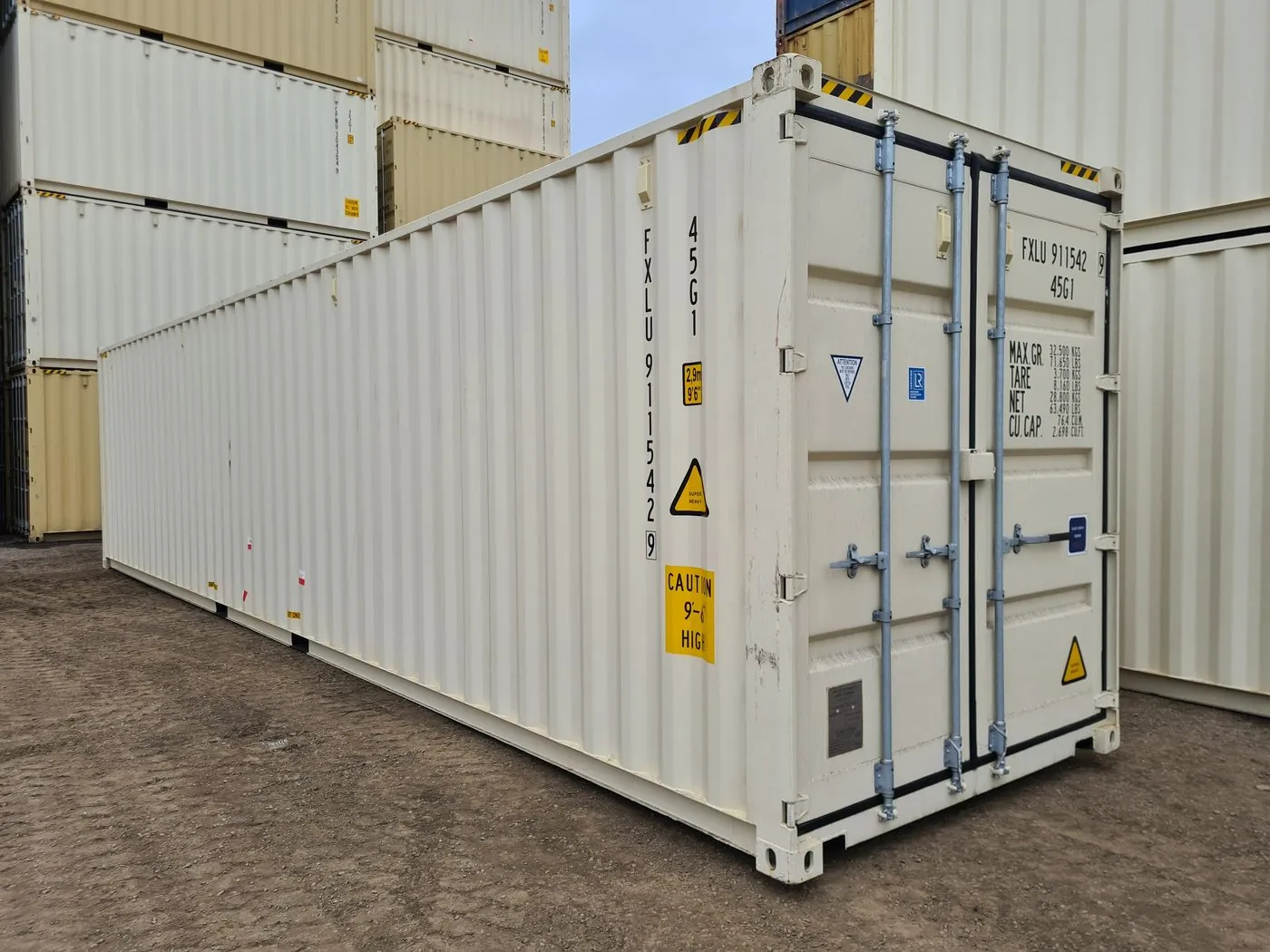
40ftYou have the space, the approach is genuinely open, and you want the most storage per dollar the site will allow.
Guides for 10ft buyers: Do you need council approval for a shipping container?, Shipping container or a shed? An honest comparison and The container types explained — which shape solves which problem.
Questions
Match the grade to what goes inside. Cargo-worthy used is the working standard for most storage and site jobs: structurally sound and inspected wind and watertight before release, for storage use. New single-trip is the pick when the 10ft will be on show, lined or cut into, because you start with straight panels and a clean floor. As-is is sold on its faults, is not sold watertight, and suits a lock-up under an existing roof or the shell of a build. Tell us the use and we will say which grade earns its money.
The door end first: both doors should swing fully, the locking bars should take a firm pull and the gaskets should be supple all the way round. Then stand inside with the doors shut and look for daylight, walk the floor for soft spots near the doors, and look along the bottom rails for heavy pitting. You can walk the units at our Cornubia yard (ring first), and photographs of the specific 10ft are sent on request, before delivery, if you cannot get there.
The CSC safety approval plate sits on the door end and records the approval, the date of manufacture, the maximum gross mass and the allowable stacking load. A current CSC examination only matters if the container is going to carry cargo through a port. For storage, a workshop or a site office it does not apply. If you plan to export in it, say so when you enquire and the plate status is checked on the specific unit before it is quoted.
Yes: doors, windows, roller doors, vents, shelving, lining and power are all common. The walls carry load, so every opening has to be reframed in steel or the box racks and the doors stop closing square. Modifying before delivery, in a yard with hardstand and the right gear, is nearly always cheaper than doing it on site. A cut container is usually no longer fit to ship cargo in, so settle the export question before any steel comes out.
Siting decides most of it. Set the 10ft level on sleepers, pads or blocks under the corner castings so air moves underneath and the bottom rails stay out of standing water, keep the roof clear of leaves and ponding, and touch up scratches before rust takes hold. A sound cargo-worthy or new unit looked after that way gives many years of service. One left flat on wet dirt will rust from the bottom rails up regardless of its grade.
The grade moves it most, then the condition of the individual unit and which yard it is released from. Cartage is worked out for your address and quoted with the container rather than published, because the access at your end changes it as much as the distance does. Prices are in AUD, ex GST.
Yes. Hire earns its keep when the container has a finish date on it, such as a build, a fit-out, a harvest or a rebuild after storm damage. If it is still going to be sitting there in two years, buying is nearly always the cheaper end of the deal by a wide margin. Give us the period and both numbers get run for you.
Same thing. “10ft”, “10 foot” and “ten-footer” all describe a container about 2.99m long externally, and the trade uses the three interchangeably. The measurement is nominal and taken from the outside, which is why the inside comes back at 2.83m rather than a round three metres.
Length, and almost nothing else. Both are 2.44m wide and 2.59m high externally, both take the same doors, the same locking bars and the same lock box, and both come in the same grades. A 20ft is roughly double the floor area, takes about ten Australian standard pallets on the floor against two across the width of a ten, and is usually cheaper per cubic metre because supply of twenties is deep and supply of tens is not. A 10ft goes onto a tilt-tray and wants about half the approach, which is the whole reason to choose one.
Yes. A 10ft is the easiest size in the range to relocate because it goes back onto a standard tilt-tray rather than needing a crane. Empty it first, and make sure the access that got it in still exists — if a fence came down or a tree was trimmed on delivery day, the same clearances are needed on the way out.
It depends entirely on the grade. New single-trip and cargo-worthy used units are inspected wind and watertight before they are released, for storage use. As-is units are not sold watertight and carry no such claim — they are the cheap end precisely because something on them is past its best, and we will ask what is going inside before letting anybody buy one on price alone. If the contents have to stay dry, start at cargo-worthy.
About 2.5m of clear ground in front of the doors for them to swing through their full arc, plus somewhere to stand while you load. It is the measurement people forget, because the truck fits and the container fits and then the doors meet a fence. Check it before you decide where the box lands, not after.
Yes. Our own yard is at 51–55 Bromley Street, Cornubia, about half an hour south-east of the Brisbane CBD off the M1, and 10ft units for sale and hire stand on hardstand there where you can swing the doors and walk the floor. Ring first so the unit is pulled clear of the row. Brisbane is also where the ten earns its keep: it comes off an ordinary tilt-tray and wants about half the approach a 20ft does, so the pinched side passages and short setbacks through Coorparoo, Annerley, Wooloowin, Ashgrove and the inner north that rule out a longer box are usually workable. Where the only path is over a high-set house, a crane truck places it instead, and our Brisbane page covers the ridges, the silt and what to photograph before you ring.

Room for more.Less mucking around.
Get a price
Give us the delivery postcode and a description of the entrance, and the cartage comes back in the same number as the container.
Or skip the form and ring us — 1300 467 776, Mon-Fri 7:30am-5pm, Sat 8am-12pm