
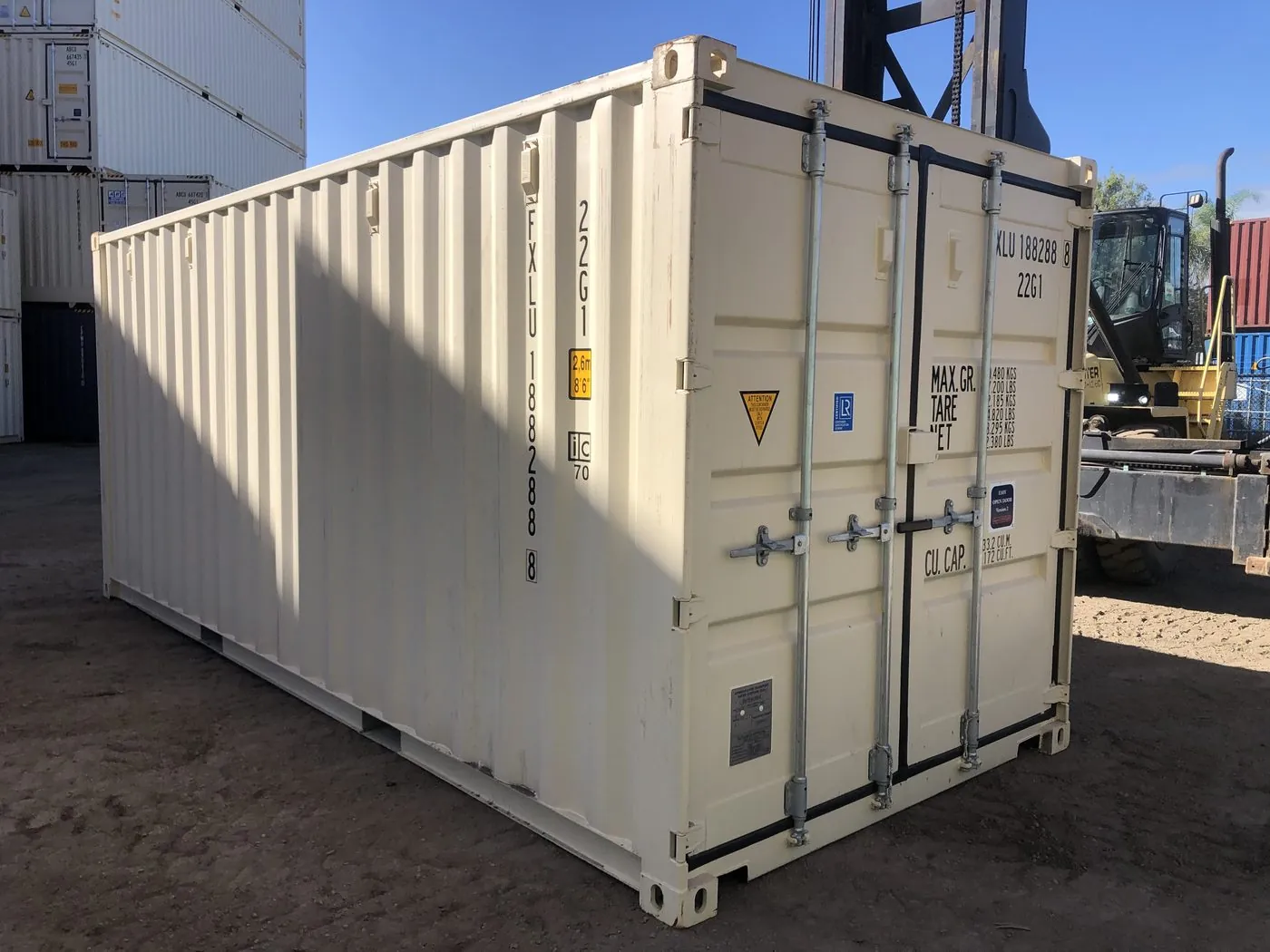
10ft10ft Shipping Containers
Side access is pinched, the setback leaves nothing to manoeuvre in, or all that is needed is a lockable spot for the mower, an air compressor and a wall of hand tools.

Albany, WA
Albany sits at the far end of the Albany Highway, on a coast that takes the weather straight off the Southern Ocean. Cold fronts roll through from the south-west, the drizzle can last for days, and even in summer the air off King George Sound carries more moisture than Perth ever sees. That climate, more than distance, shapes how a container should be chosen and set up here. Get the ventilation and the siting right, and a steel box is one of the most useful things on a Great Southern property. Get it wrong, and you open the doors in August to find mould on everything you cared about.
The practical read on this town.
Request a delivered price1300 467 776
Cornubia is the only yard you can walk into — ring first. Everywhere else, ask for photographs of the actual unit before delivery, or inspection by arrangement at a partner depot.
Grade moves the price more than size does, and it is what decides whether a unit is sold watertight — the full rundown is on the grades page.
The range
Priced with delivery to your address - one call, one number.
10ftSide access is pinched, the setback leaves nothing to manoeuvre in, or all that is needed is a lockable spot for the mower, an air compressor and a wall of hand tools.
20ftThere is about seven metres of straight, reasonably level ground for it to sit on, and you would rather not discover in half a year that the bigger box was the answer.
40ftYou have the space, the approach is genuinely open, and you want the most storage per dollar the site will allow.
Around Albany we deliver containers for equipment, fuel and chemical storage for the blue gum plantation and harvest contractors, grain, seed and machinery storage on the cropping and sheep properties through Narrikup, Kendenup and out toward the Stirling Range, gear for the vineyards around Mount Barker, the Porongurups and Denmark, trade and stock storage on the Milpara and Mirambeena industrial land, pots, nets and boat gear for people who fish out of Emu Point and Princess Royal Harbour, site stores on the builds at Bayonet Head, McKail and Little Grove, and furniture held while an older weatherboard in Middleton Beach or Mount Melville is restumped or extended.
Albany is built around granite. Mount Clarence and Mount Melville rise straight behind the town centre, Mount Adelaide sits over the harbour, and the older streets climb their slopes at gradients that would make most drivers change down twice. Streets in the older parts of town, from Stirling Terrace up toward the lookouts and across into the Middleton Beach side, are narrow and steep, with stone walls on the boundary, established trees over the road and driveways that tip sharply up or down from the kerb. A tilt-tray bed can ground out on a steep crossover before the container is anywhere near the spot, and on some of those blocks a crane truck reaching from the street is the only sensible option. The newer suburbs east and north, at Bayonet Head, McKail, Yakamia and Lange, are much gentler, with wider roads and more room. The industrial land around Milpara and the Mirambeena area is easier still, flat and built for heavy vehicles. Ground varies block to block. Weathered granite and gravel on the rises carry a container well, but grey sands on the flats hold water through winter, and the swampy country around Lake Seppings and the creek lines stays soft for months. Farm and plantation access depends on the season: gravel roads corrugate in summer and soften through winter, paddock gateways get churned, and log trucks share the plantation tracks with everyone else. Photos of the street, the approach and the spot, plus a note on which way the block slopes, tell us most of what we need.
Albany
Albany gets more rain than Perth, but what matters more for a container is that it is damp. Rain falls on a lot of days rather than all at once, cloud and drizzle hang about for most of winter, and the nights are cool enough that moisture in the air condenses on anything cold. The inside face of a steel roof is exactly that. On a still winter night, warm moist air trapped in a container gives up its water on the underside of the roof, and it drips back down onto whatever is stored below. Furniture, mattresses, cardboard boxes, books and clothing all suffer, and they suffer slowly enough that nobody notices until the damage is done.
The fixes are not complicated but they need doing from the start. Ventilation is the most important: vents at both ends so air passes through, and whirlybirds if the contents matter. Nothing damp should go in, and anything absorbent should be wrapped or boxed in plastic and kept up off the floor on pallets. A moisture absorber or two helps in a container that stays shut for long stretches. Face the doors away from the prevailing south-westerly so rain is not driven straight at the seals, and keep leaves and twigs off the roof so water runs away instead of pooling. Ask about the grade too, because only cargo-worthy and new single-trip units are sold as wind and watertight.

On the ground
Granite is a gift and a nuisance. Where bare rock sits at or near the surface it is about the best ground in the country for carrying a container, because nothing under it is going to settle. The trouble is that granite is rarely level and it is slippery when wet, so getting four corners to the same height takes packing rather than digging, and a truck working on sloping rock after rain needs care. If your spot is on rock, say so, and we will bring enough timber to pack the low side up rather than turning up expecting a flat gravel pad.
Distance is the other thing to plan for. Everything comes down the Albany Highway through Williams, Kojonup and Mount Barker, and a container that goes the wrong way is expensive to put right. So be clear about what you need from the start: the length, whether you want a standard height or a high cube, which way the doors should face once it is placed, and whether a personnel door, extra vents or a shelving fit-out should be done before it leaves. If you are likely to need a second container in the next few months, mention it now so both can travel on the same truck. Talk to us on 1300 467 776 about the Great Southern address and the job, and the figure you hear includes the long haul south.
Older homes add another reason to hire. Many weatherboard and brick houses in the established parts of Albany are being restumped, reroofed, extended or refitted, and the contents have to go somewhere while the work happens. A container on the front lawn or the driveway keeps furniture close, locked and dry, provided it is set up properly for the climate, and it leaves once the builders do. If the job is a restump, place the container where it will not block the trades working under the house, and leave room for the timber and steel deliveries that will follow.

Worth knowing
Great Southern farms keep a calendar that deliveries should respect. Seeding runs through autumn into early winter, lambing follows, and harvest for grain and canola usually starts in late spring and runs into summer. During harvest nobody on a cropping property has time to stand around waiting for a truck, and during the wettest part of winter paddock access can be poor. The easiest windows are usually late summer and early autumn, when the ground is firm and the header has been put away. If a container has to arrive mid-harvest, give us a farm contact who will actually answer the phone and a drop point near the sheds that will not get in the way of the grain trucks.
Plantation work has its own pattern. Blue gum harvest and haulage contractors move between properties, their access tracks are shared with log trucks, and the drop point may be a landing in the middle of a plantation rather than an address with a street number. We need a GPS pin or clear directions from the nearest public road, the site contact, and any induction or access rule the plantation manager sets. Treat the container as a secure store rather than a safe haven in a bushfire: it is not protection for people or contents, so site it on cleared ground away from fuel and keep the area around it slashed.

Delivery is worked out per address and quoted with the container. Access moves it more than distance does, which is why there is no published figure.
We also deliver to Mount Barker, Denmark, Little Grove, Kalgan, Porongurup and the surrounding district. If your town is not on the list, ring — it almost certainly still works.
Common questions
Airflow and keeping things dry at the start. Fit vents at both ends, and whirlybirds if you are storing furniture, clothing or paper. Do not put anything damp inside. Wrap soft items in plastic, keep everything up off the floor on pallets, and use moisture absorbers if the doors stay shut for long periods. Face the doors away from the south-westerly and keep the roof clear of leaves. Albany's damp is steady rather than dramatic, so a well-ventilated container stays dry and a sealed one does not.
Yes, but the paddock and the gateway will decide how. Through the wettest months gravel roads soften, gateways churned by stock turn to mud, and a loaded truck needs firm ground all the way to the drop point. Often the best answer in winter is dropping the container on a gravel pad near the sheds and letting your loader shift it later. Tell us the road surface, the gateway width and where a truck can turn around, and we will plan it.
Yes. Mount Barker and the Porongurups are on the way in from the highway, and Denmark and Walpole are further west along the South Coast Highway. Council rules differ: the Shire of Plantagenet covers Mount Barker and Kendenup, the Shire of Denmark covers Denmark, and Walpole is in the Shire of Manjimup. Check with the right one before ordering. Around Denmark and Walpole the forest closes in, so send a photo of the driveway so we can check for low branches.
Stock for the Great Southern is held at a Fremantle depot, and inspection there is by arrangement rather than a walk-in, so ring first if you happen to be in Perth. For most Albany buyers the better option is photos of the actual container on request, sent before delivery, showing the corners, the door end, the roof and the length of the floor. If anything in the photos is not what you expected, it gets sorted before the container goes on the truck.
Often, but usually by crane rather than tilt-tray. The streets on those slopes are narrow and steep, and a tilt-tray bed can ground out on a sharp crossover before the container reaches the spot. A crane truck standing in the street can lift over a fence or a wall if there is clear air above. Send photos of the street, the driveway and the spot, and tell us about any power lines or trees overhead.

Room for more.Less mucking around.
Get a price
We deliver to Albany and the surrounding district. Tell us what is going in it and what the access is like, and you will get a price with the cartage worked out.
Or skip the form and ring us — 1300 467 776, Mon-Fri 7:30am-5pm, Sat 8am-12pm