What is the difference between a new and a used shipping container?
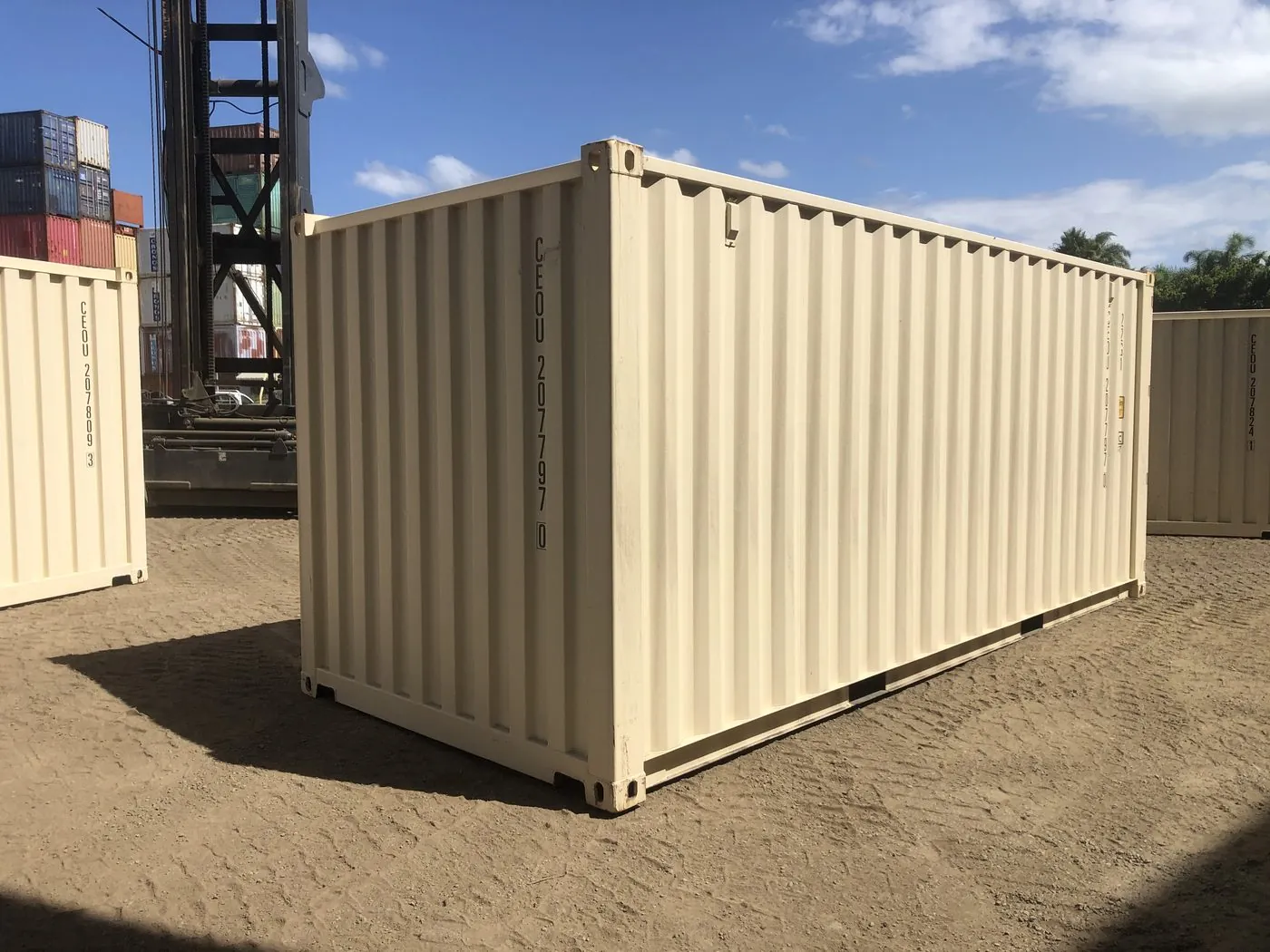
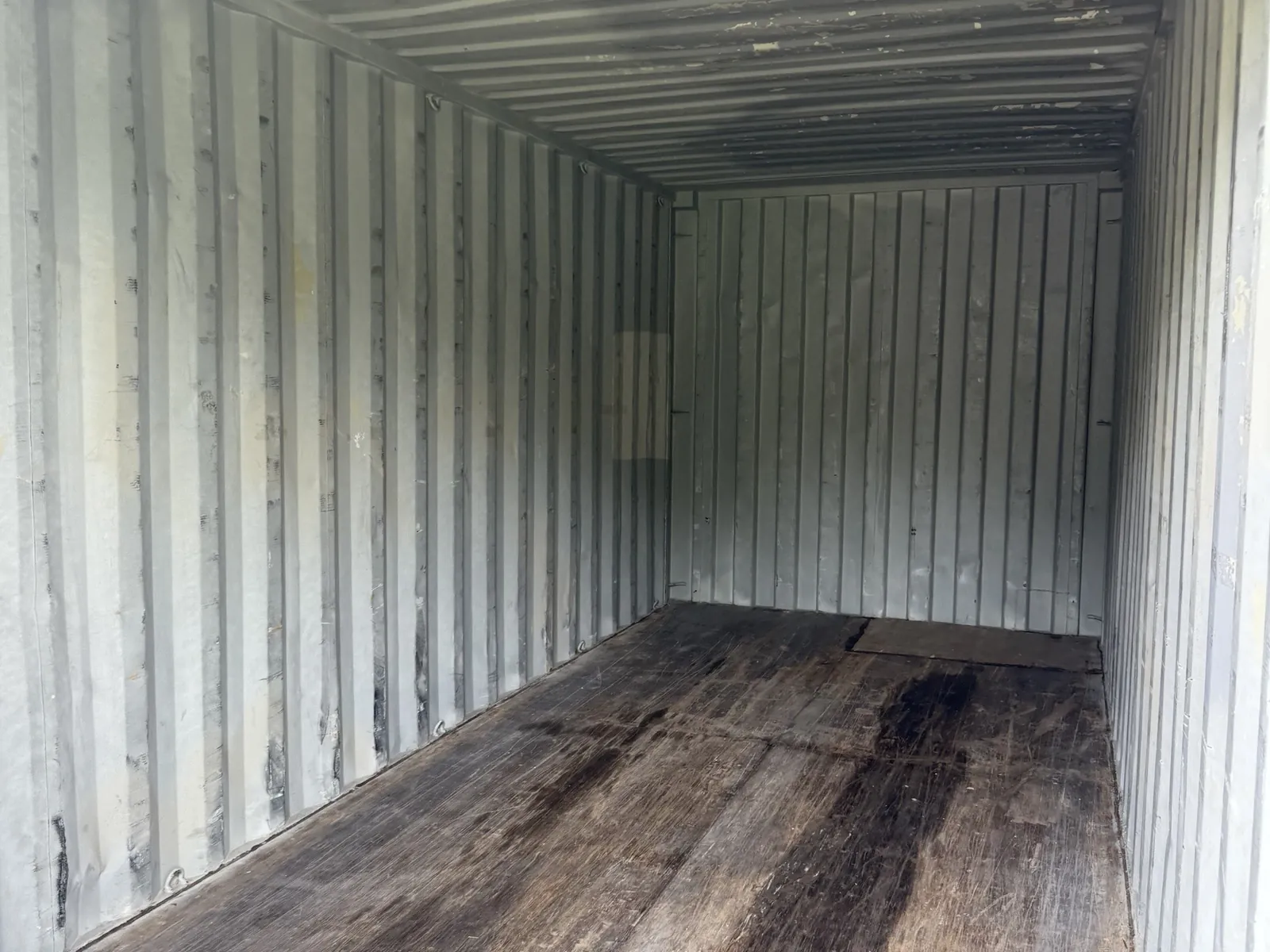
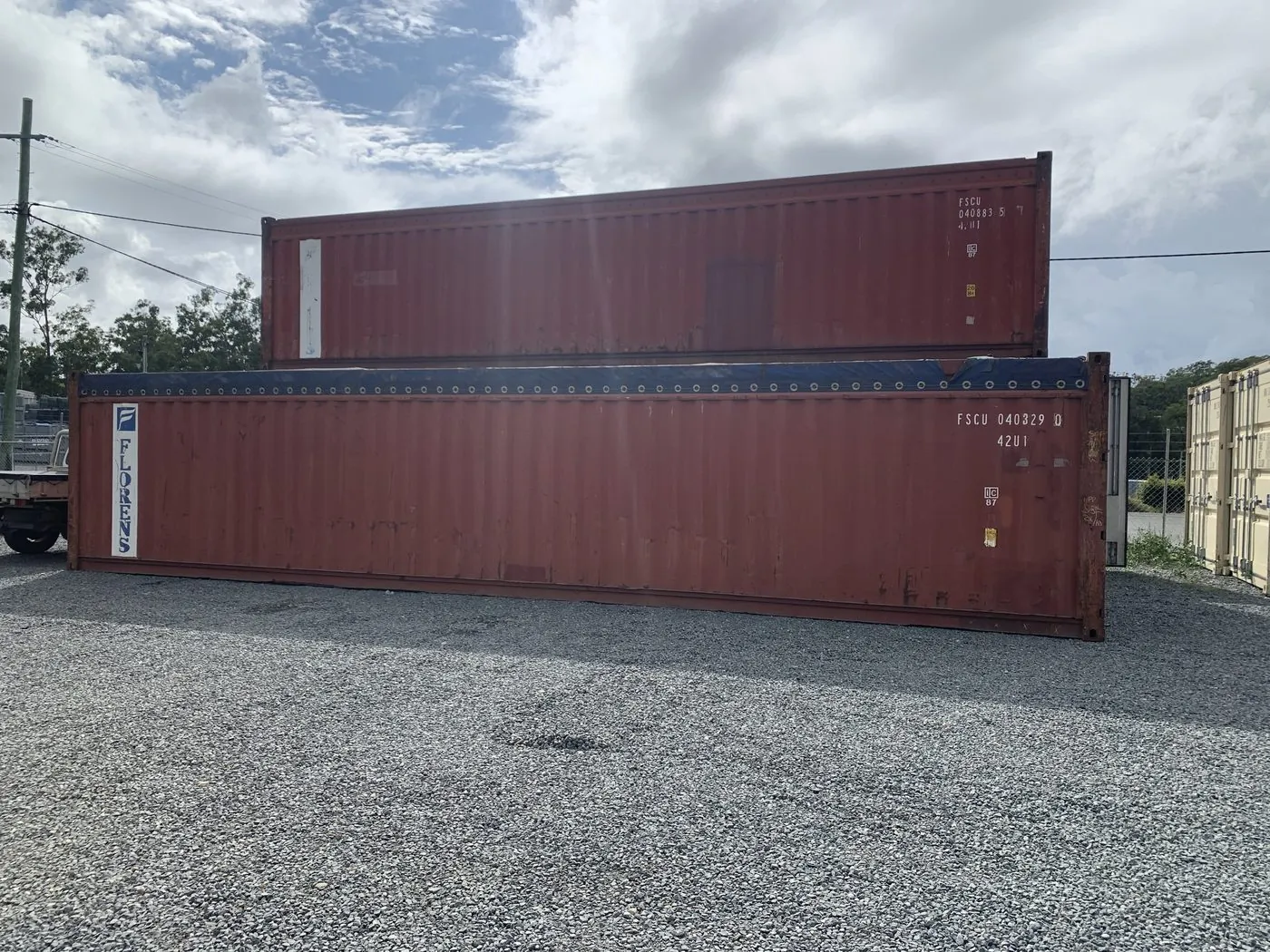
A new container here means single-trip: built overseas, loaded once for the voyage to Australia, then stripped out and sold. Factory paint, a clean floor, seals that have barely seen weather, and the top of the price range. A used container has done years of sea service and is sold on its grade: cargo-worthy used is structurally sound, floor solid, doors sealing, and inspected wind and watertight before it leaves; as-is is retired with its faults described and photographed on request, and is not sold watertight. For plain storage most buyers are best served by cargo-worthy used. Where the container will be on show, lined out or converted, new single-trip is the safer start.
Which size shipping container should I buy?
Settle what the site can take before what you would like. A 10ft suits a pinched side access or a small lock-up for tools and a mower. A 20ft is the default for the trade and for household storage, wants about seven metres of straight, level ground, and carries the deepest stock and the widest choice of grade. A 40ft gives near enough double the room and usually costs only a little more than a 20ft of the same grade, but needs a long, open approach and a crane truck. A high cube adds 300mm of headroom to a 20ft or 40ft and is the one to buy if the box is being lined, fitted with a roller door or converted. Ring with the address and we will tell you which of those actually fits.
Do you deliver shipping containers for sale Australia-wide?
Yes. The head yard is at Cornubia, south-east of Brisbane, and stock is held and drawn through yards and depot partners in every state and territory, so a container bought here is released from the yard closest to your address rather than carted across the country. Delivery is quoted with the container, in one figure, because it moves with distance and with what your entry will take — give us the suburb or postcode and you get the whole cost to your address, not a headline that grows later.
How quickly can a container for sale be delivered?
It depends on which yard holds the size and grade you have settled on and what is already travelling your way, so the honest answer comes with the quote rather than as a promise on a web page. A unit already standing in the yard nearest you moves sooner than a grade that has to be released from another state, and a long regional run is scheduled around what else is travelling that way. Tell us the date you are working to when you enquire and we will say plainly whether it is realistic.
How do I work out which grade I need?
Ask what happens if the contents get damp. If the answer is nothing much — steel, timber, garden gear, building materials, a lock-up already standing under a roof — as-is is a genuinely good buy and paying for a higher grade buys you nothing you will use. If the answer is that something is ruined, start at cargo-worthy, which is inspected wind and watertight before release. New single-trip is for the jobs where the container is on show or is going to be built into something.
Can I look at the actual container first?
Yes, and it is the best hour you can spend. The Cornubia yard at 51–55 Bromley Street, Cornubia QLD 4130 is open on weekdays and Saturday mornings — ring ahead so the unit is pulled out of the row rather than buried three high. If the container you want is standing at a yard nowhere near you, ask and we will photograph that individual unit on request, before delivery: doors open, the length of the floor, the roof and any repair that has been done to it.
How does payment work?
The purchase is settled before the container is released for transport. That is standard in the trade and it is what allows a particular unit to be held with your name against it instead of being sold out from under you while paperwork moves. It is also exactly why we would rather you inspected it or looked at photographs of it first — nobody benefits from a surprise on the back of a truck.
Is a used container guaranteed?
The grade is the guarantee, and it is a real one. Anything sold as cargo-worthy is inspected wind and watertight before it leaves, and if one turns up and is not, sorting it out is our problem rather than yours. As-is is the opposite arrangement done openly: the unit is sold on its faults, those faults are described and photographed, and it carries no watertight claim at all. What will not happen is a unit being described as something it is not.
Can you hold one while my slab cures?
Usually, within reason, and plenty of people buy while the base is still being poured. There is a practical limit — a hardstand full of containers with names on them and no delivery date is stock that cannot be traded — so treat it as a conversation rather than an assumption. Tell us the likely date when you buy and we will tell you honestly whether holding it that long works.
Is one 40ft better value than two 20fts?
Often, on current quotes — a 40ft frequently costs only a little more than a 20ft for about twice the room, and it arrives on one truck instead of two. That depends on the grade, the units standing in the yard and the delivery run, so there is no blanket winner; ask for both figures. The catch is entirely at your end: a 40ft wants a good deal more straight approach, more room to manoeuvre and a longer level pad, and there are plenty of blocks that will take a 20ft comfortably and simply cannot fit the longer box. Work out what the site allows first, then compare the prices.
Do I need approval to put one on my property?
It depends on your council, and the rules genuinely differ from one shire to the next — how long it is staying, whether it is visible from the street, how close to the boundary it sits and what you intend to use it for all come into it. It is one phone call to your own council and much better made before the container arrives than after somebody complains. There is a general rundown in our guide to council approval.