
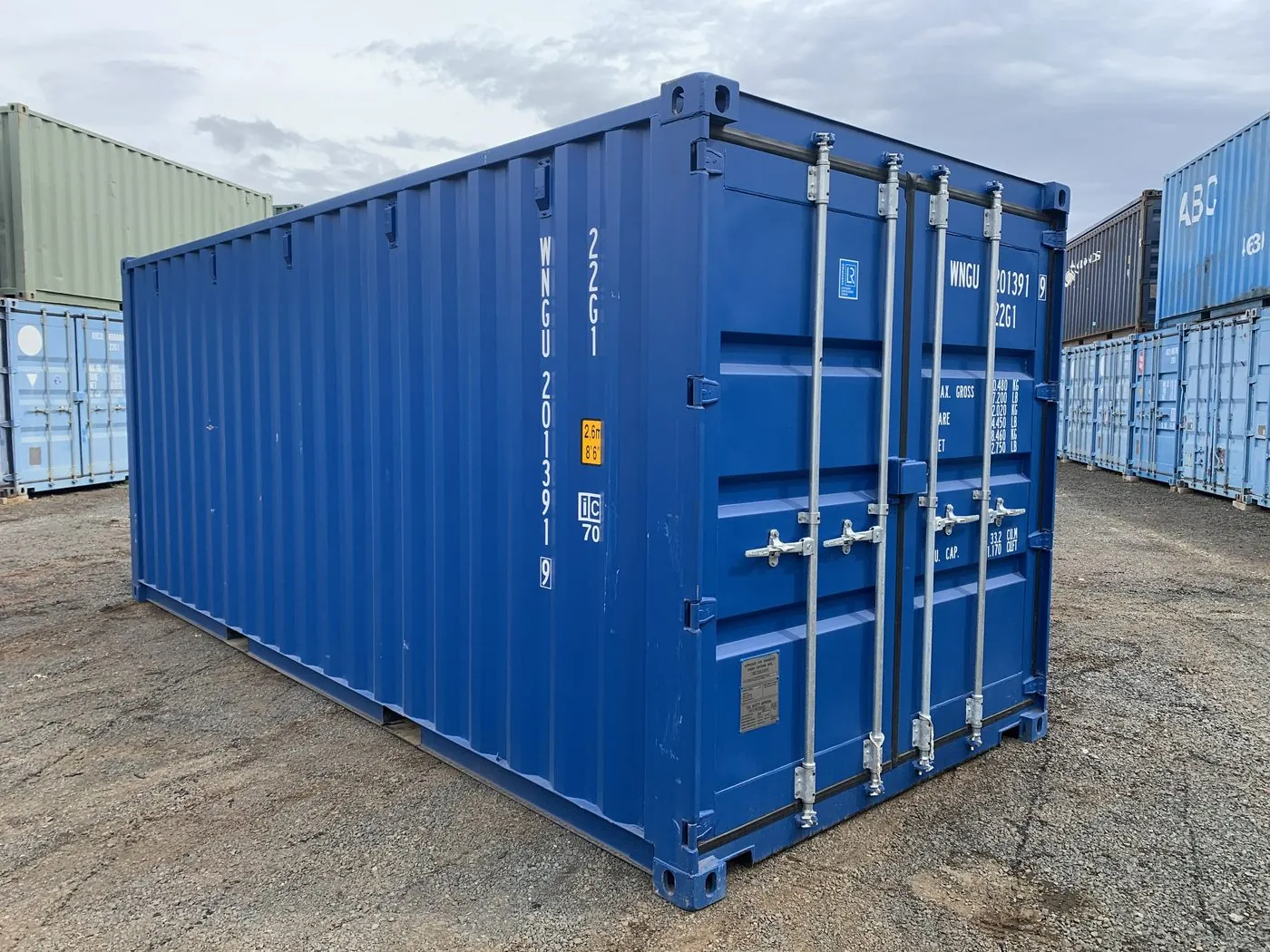
10ft10ft Shipping Containers
Side access is pinched, the setback leaves nothing to manoeuvre in, or all that is needed is a lockable spot for the mower, an air compressor and a wall of hand tools.

Mandurah, WA
Mandurah is a town arranged around water, and most delivery questions here come back to it. The estuary, the Peel Inlet and the Harvey behind it, and the kilometres of canal frontage cut through Halls Head, Port Mandurah and Dawesville mean a great many local blocks were made rather than found: sand pumped out of a channel, shaped, walled off and built on. Made ground behaves differently from a dune that has sat undisturbed for thousands of years, and knowing that before a truck backs down a driveway toward a canal wall saves a lot of grief.
Start here if you are working out what to order.
Request a delivered price1300 467 776
Cornubia is the only yard you can walk into — ring first. Everywhere else, ask for photographs of the actual unit before delivery, or inspection by arrangement at a partner depot.
Grade moves the price more than size does, and it is what decides whether a unit is sold watertight — the full rundown is on the grades page.
The range
Priced with delivery to your address - one call, one number.
10ftSide access is pinched, the setback leaves nothing to manoeuvre in, or all that is needed is a lockable spot for the mower, an air compressor and a wall of hand tools.
20ftThere is about seven metres of straight, reasonably level ground for it to sit on, and you would rather not discover in half a year that the bigger box was the answer.
40ftYou have the space, the approach is genuinely open, and you want the most storage per dollar the site will allow.
Around Mandurah we deliver containers for crab pots, rods, outboards and trailer gear for households who ran out of room beside the boat pen years ago, site stores on the builds going up through Lakelands, Madora Bay and Meadow Springs, trade and plant storage on the light industrial land at Greenfields and out at the Peel Business Park in Nambeelup, lock-up for contractors who work at the alumina refinery near Pinjarra or drive up to the Boddington gold mine, furniture held while a canal house is renovated or put on the market, and feed, tack and machinery kept dry on the small rural lots through Stake Hill, Keysbrook and Serpentine.
Picture a typical canal house in Mandurah and you can picture the delivery problem. The lot is long and narrow, the house fills most of it, the garage takes the street frontage, and everything worth having is out the back facing the water. There is rarely a side path wide enough to walk a wheelie bin down, let alone reverse a tilt-tray. So the realistic spots are the driveway apron, a front setback, or the rear yard reached by crane over the roof, and each of those comes with its own catch. A container parked across the garage apron blocks the garage. The front setback on many estates is governed by design guidelines that frown on anything resembling a shed. A lift over the house needs clear air above it, which means checking the service line to the house, the neighbours' roof lines and anything tied up at the jetty below. None of that rules a container out. It just decides the size, and on a lot of Mandurah canal blocks a 10ft placed well beats a 20ft forced in. The cul-de-sacs at the end of each canal finger are the other pinch point. Their turning heads were drawn for cars and a boat trailer, not a rigid truck with a six metre load, so a driver may need to reverse in from the last intersection. Parked cars, bins on collection day and a boat on a trailer outside number twelve all matter more here than they would in an ordinary street. Away from the water, the older parts of town around the foreshore have shorter, busier streets, and the newer estates east of the freeway at Lakelands and Meadow Springs are wide and straightforward. Out toward Pinjarra and the Yunderups it becomes rural driving again, with gravel shoulders, table drains and gateways built for a tractor.
Mandurah
Every canal lot in Mandurah finishes at a revetment or retaining wall that holds the land up against the water. That wall was engineered to carry a house, a lawn and people walking about. It was not engineered on the assumption that somebody would stand two or three tonnes of steel, plus whatever gets packed inside it, a metre back from the edge. Load placed near the top of a wall pushes sideways on it, and the fill behind these walls is often sand dredged from the channel itself, which is not the most forgiving material. The honest advice is simple: keep a container well back from the waterline, and if the only space available is near the wall, ask the estate manager or an engineer before you order rather than after. We would sooner sell you a smaller box in the right place than a bigger one in the wrong one.
Boat owners are the most common canal buyers, and the reason is usually a crowded garage. Outboards, fuel, crab pots, life jackets and fishing gear smell of salt and bait, they drip, and nobody wants them in the house. A container works well for that job with two provisos. First, rinse and dry gear before it goes in, because wet pots and damp ropes shut inside a steel box on a warm afternoon make a very particular smell and a lot of condensation. Second, give it ventilation. Standard vents are a start and a pair at each end is better. Keep fuel containers to what you genuinely need, keep them upright and away from anything that sparks, and treat the container as a store rather than a workshop.

On the ground
Much of residential Mandurah sits only a little above the water it looks out on, and the groundwater underneath rises and falls with the seasons. Through a dry summer a sandy lot at Coodanup, Furnissdale or the lower parts of Halls Head feels firm underfoot. Late in a wet winter the water table can sit close enough to the surface that the same lawn goes spongy, and a loaded rear axle will find the soft patch by sinking into it. If your block has a corner where puddles linger after rain, tell us where it is. That corner is not where a truck should stand and it is not where a container should sit either.
Setting up on made ground is about spreading the weight and keeping the floor dry. Solid pads or treated sleepers under each corner, bedded until they stop moving, and enough height to keep the underside of the floor clear of damp sand and let air pass beneath. On the lowest estuary lots it is worth thinking about where water goes when a winter storm lines up with a big tide and pushes the estuary higher than usual. A container keeps rain off from above and nothing more. Once the estuary is lapping at the doors, the rubber seals are no barrier at all, and a box with nothing in it is buoyant enough to shift off its pads. Put it on the highest practical part of the lot, keep valuable items off the floor on pallets, and do not treat it as a way of keeping anything safe from rising water.

Worth knowing
Plenty of Peel deliveries never touch a canal. East of the freeway the country opens onto the Murray and Serpentine flats around Pinjarra, Ravenswood and Barragup, where the soils are heavier and paddocks that are hard in March hold water for weeks in August. Hobby farms, horse properties and turf and vegetable growers all use containers for feed, fencing gear, pumps and machinery. What matters on those jobs is the entry from the road: the culvert under the gateway, the width between the posts, and whether a loaded truck can turn around at the far end rather than reversing a long gravel drive. North and South Yunderup add their own twist, with river canals and narrow residential streets on the Murray that behave more like a canal estate than a farm.
Further east the Darling Scarp rises into jarrah forest around Dwellingup, and a delivery up there is a hill job. Roads narrow, bends tighten, the verge drops away and branches reach across the road. Send photos of the approach and the gate, and be realistic about length: a 20ft is usually the upper limit on a forest block. For contractors heading on to Boddington or the refinery, the site will have its own access rules, inductions and preferred drop point, and we need those details early. A call to 1300 467 776 with the Peel address and the purpose gets you a single price covering the container and getting it there.

Delivery is quoted with the container. It moves with the distance, the truck the site needs and how hard the last thirty metres are, so we price it per job rather than publish a figure that would be wrong for half the addresses here.
We also deliver to Pinjarra, Halls Head, Dawesville, Rockingham, Waroona and the surrounding district. If your town is not on the list, ring — it almost certainly still works.
Common questions
Sometimes, usually by crane over the house rather than through a side gate, because most canal lots have no side access a truck can use. Whether a lift works depends on clear air above the roof, the power line into the house, the neighbours and what is moored below. The other question is the canal wall. Keep a container well back from the water, and if space near the wall is the only option, ask your estate manager or an engineer first. A 10ft in the right spot is often the better buy.
Check with both before you order. The City of Mandurah sets the rules on outbuildings and on how long a container can sit on a residential lot, and many canal and newer estates also carry their own design guidelines about what can be seen from the street or the water. Those rules differ between estates and change over time, so we will not guess at them for you. A short call to the council and a look at your estate guidelines settles it, and it is far easier before delivery than after.
Stock for the Peel is held at a Fremantle depot and trucked south on the freeway. It is a working depot rather than a showroom, so inspection is by arrangement: ring first and a time is organised with the unit you want pulled out where you can open it. If a drive north is not worth it, ask for photos of the actual container on request and they come through before delivery, showing the doors, the floor, the roof and the corners.
Yes, if you manage the moisture. Rinse salt off, let pots, ropes and wetsuits dry before they go in, and fit vents so air moves through the box, ideally at both ends. Keep things off the floor on shelving or pallets. Store only the fuel you need, upright and sealed. A container shut up with wet gear on a warm day sweats and smells, and one that breathes stays pleasant to open for years.

Room for more.Less mucking around.
Get a price
We deliver to Mandurah and the surrounding district. Tell us what is going in it and what the access is like, and you will get a price with the cartage worked out.
Or skip the form and ring us — 1300 467 776, Mon-Fri 7:30am-5pm, Sat 8am-12pm