
What a shipping container costs in Australia — and what moves the number
The five things that set the price of a shipping container in Australia: grade, size, which depot it sits in, how it reaches you and what the market is doing.
Guide · 9 min read
Most containers in this country are bought without the buyer ever standing in front of them, and that is fine — provided the right questions get asked in the right order. The risk is not distance. It is buying a description instead of a unit. Here is how to make a remote purchase as safe as walking a yard.
The first question in a remote purchase is which yard the container is standing in, because that decides most of what follows: what it costs to get to you, how quickly it can move, whether photographs are available today or next week, and whether you have any realistic option of inspecting it.
Our stock sits at the Cornubia yard and at depots through Gympie, Rockhampton, Mackay, Townsville, Cairns, Grafton, Darwin and Fremantle. When you ring, lead with the delivery address. A unit already sitting a few hundred kilometres from you is a different proposition to an identical unit on the other side of the continent, and there is no sense pricing the wrong one.
Sometimes the honest answer is that the right unit is not near you this week but will be. Stock rotates between depots. If your timing has any flexibility in it, say so — it occasionally changes the number.
The most common cause of disappointment in a remote purchase is a grade misunderstanding, not a defect. Words like "good", "tidy", "premium" and "A-grade" mean different things to different sellers and nothing at all in a dispute.
What you want stated plainly is which of three things you are buying: a new one-trip unit, a cargo-worthy used unit, or a unit sold as-is. Cargo-worthy and new are checked wind and watertight before they leave. As-is units are not sold watertight and may carry a patched repair, a soft section of floor or a door seal that no longer seats — which is entirely fine for steel, fencing, formwork and scrap, and not fine for anything that has to stay dry.
Have that grade written into the quote or the email. The grades page sets out what each one covers.
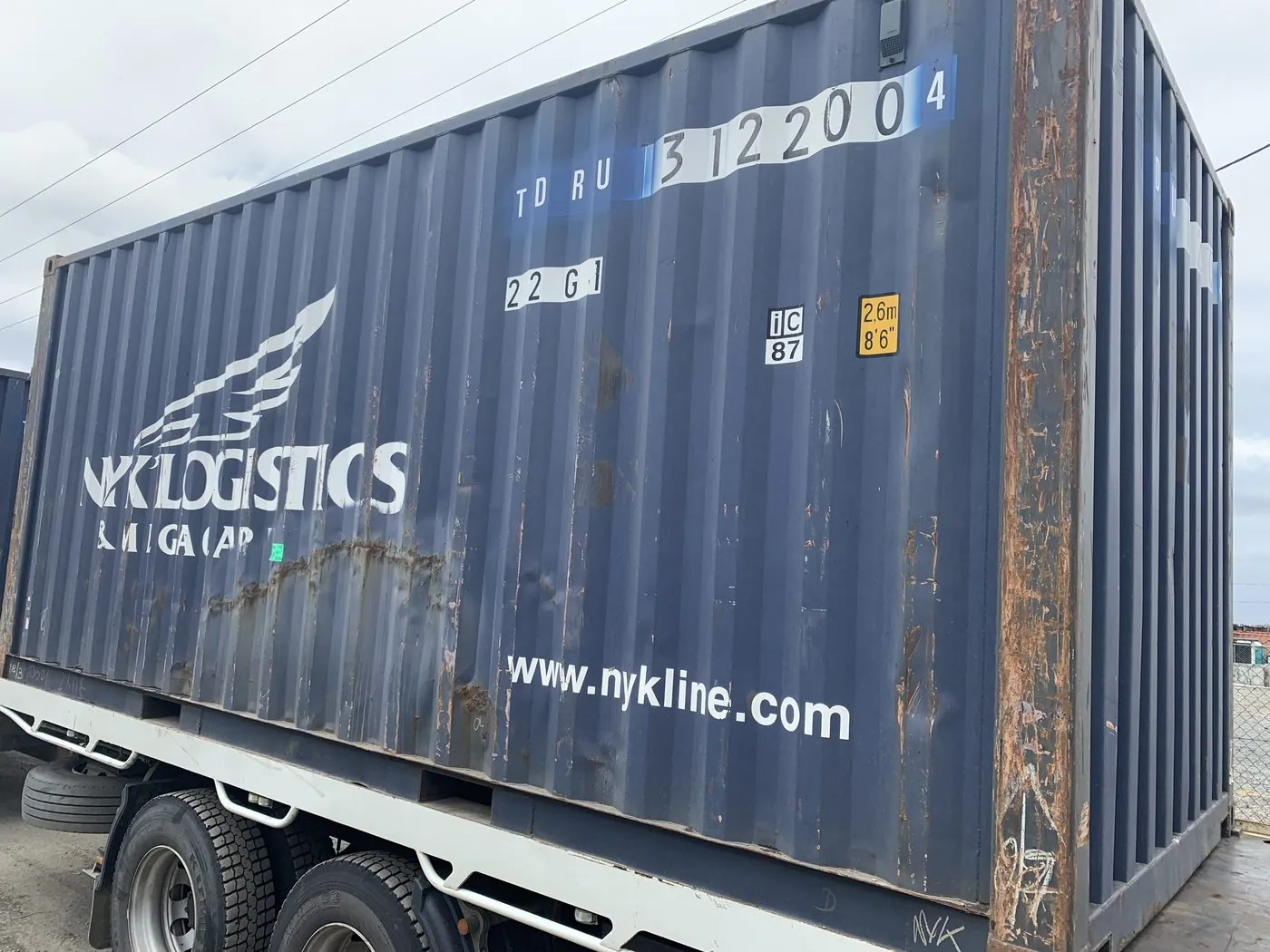
Stock photos tell you nothing. What you want is the actual unit, and there are six shots that answer nearly every question.
We send photographs of the specific unit on request and before delivery, and if there is something wrong with a particular container we would rather point at it in a photo than let it turn up as a surprise. If a supplier will not photograph the floor and the bottom rails, that is information in itself.
The first two are the important ones. There is a real difference between buying a specific unit and buying "a cargo-worthy 20ft", and both are legitimate — you just need to know which you have agreed to.
The other half of a remote purchase is the half most people skip. We cannot see your block either.
Four measurements decide every delivery: how much straight, level run there is behind the placement spot; the narrowest pinch point on the route in; what is overhead along the route, including power lines and branches; and whether the ground will carry a loaded truck. Walk it as if you were the truck and write the four numbers down.
Then send three photographs the other way. One from the road, shot straight up the access. One taken standing on the placement spot, aimed back along the route the truck has to travel. And one wide frame of the spot itself, showing the surface underfoot and the air overhead. Between those and the four measurements, we can tell you which truck suits before anyone books anything. The delivery page covers what each vehicle needs.
Regional and remote deliveries carry a bit more planning: unsealed access, wet-season road conditions, station gates, and the fact that a rescheduled run in some parts of the country takes a while to come round again. Say what you know about the last stretch, including how long it takes to dry out.
You can inspect units at our Cornubia yard (ring first); other depots are by arrangement. The Cornubia yard at 51-55 Bromley Street is open Monday to Friday 7:30am to 5pm and Saturday morning.
The other depots are third-party yards, so inspection at those is by arrangement rather than drop-in. If you want to look at a unit at Rockhampton, Mackay, Cairns, Darwin or any of the others, ask and we will organise it. It takes a phone call and some notice, and for a large purchase it is worth doing.
Do this while the truck is still there if you can, and before you start loading.
If something is not as described, ring straight away rather than after the weekend. Problems raised on the day are far easier to resolve than problems raised a month in, and we would rather hear about it immediately.
Nothing here is specific to containers, but remote purchases of large steel objects attract the same scams as everything else online. Deal with a business that has a real address, a landline or a proper business number, and an ABN you can look up. Be wary of anyone who only wants to communicate by text, cannot photograph the unit, or is well below every other quote for a grade they cannot describe.
Expect an invoice, in the business's name, with the grade, size, unit details and cartage set out separately, and GST shown properly.
Have four things ready and you will get a real number in one conversation: the delivery address, what is going in the container, the size and grade you think you want, and the four access measurements. Ring 1300 467 776 or send it through the contact page. Every enquiry is answered by a person within one business day, and if the container you have asked for is the wrong one for the job you have described, you will be told that before the invoice goes out, not after.
More guides
The five things that set the price of a shipping container in Australia: grade, size, which depot it sits in, how it reaches you and what the market is doing.
When a container on your block is likely to need council approval and when it is not, what councils actually assess, and how to ask yours for a usable answer.
Relocating a shipping container: which truck suits, why it has to be empty, how the lifting points work and the checks that decide whether it can travel at all.

Room for more.Less mucking around.
Get a price
Ring us — 1300 467 776 — or send it through.
Or skip the form and ring us — 1300 467 776, Mon-Fri 7:30am-5pm, Sat 8am-12pm